Life After Traumatic Brain Injury: What Recovery Really Looks Like
Understanding the long road that follows a life-altering TBI — and why healing is not linear.
Request our Free Book on Traumatic Brain Injury
A traumatic brain injury (TBI) can change a life in an instant. Whether caused by a car crash, fall, assault, or sports injury, the effects often extend far beyond the initial hospitalization. For many patients and families, the most difficult part of a TBI is the life that follows the emergency treatment.
Recovery from a traumatic brain injury is rarely quick or predictable. It is a process that unfolds over months or years, and in some cases, recovery means learning how to live well with lasting changes. Understanding what life after a TBI truly looks like can help patients and families prepare, adapt, and advocate for the care and support they deserve.
Key Takeaways
- TBI recovery is highly individualized; no two brain injuries heal the same way.
- Many symptoms are not visible to those who knew the person before the TBI, including cognitive, emotional, and behavioral changes. You can expect improvements to happen slowly and unevenly, with setbacks along the way.
- Family members often become unofficial caregivers, advocates, and coordinators.
- Long-term rehabilitation, accommodations, and legal guidance may be essential.
Recovery Is a Process, Not a Finish Line
One of the most misunderstood aspects of traumatic brain injury is recovery itself. Many people expect a clear endpoint or obvious moment when someone is “back to normal.” In reality, TBI recovery is better understood as a continuum rather than a cure.
Early recovery may focus on physical survival and stabilization. As time passes, challenges often shift toward cognitive function, emotional regulation, memory, communication, and stamina. Progress can be difficult to recognize day to day, even when meaningful gains are occurring over time.
It’s also common for symptoms to change rather than disappear, requiring ongoing adjustments in treatment and daily life.
Living With a Traumatic Brain Injury: Common Long-Term Effects
Even after visible injuries heal, many people continue to experience long-term TBI effects that impact daily living. The table below breaks them down by severity and category. Even after visible injuries heal, many people continue to experience lingering effects that impact daily living.
The table below breaks them down by severity and category.
| Severity | Physical Effects | Cognitive Effects | Behavioral / Emotional Effects |
|---|---|---|---|
| Mild TBI (Concussion) |
|
|
|
| Moderate TBI |
|
|
|
| Severe TBI |
|
|
|
Why TBI Symptoms Are Often Invisible
Unlike a broken bone or surgical scar, many effects of a brain injury can’t be seen. This invisibility can lead to misunderstandings at work, school, and even within families.
Patients may look “fine” but struggle internally with exhaustion, confusion, or emotional overload. Because of this, individuals with TBI are often expected to resume responsibilities before they are truly ready, which can worsen symptoms and slow recovery.
Validation and education are critical — for patients and those around them. For more on this topic, read What Is Traumatic Brain Injury?
The Role of Rehabilitation in the TBI Recovery Process
Rehabilitation after a traumatic brain injury is rarely a one-size-fits-all solution. Rehab may continue long after discharge from the hospital and may need to be adjusted as symptoms evolve.
A comprehensive recovery plan may involve:
- Physical therapy to address balance, strength, and mobility
- Occupational therapy to relearn daily tasks and adapt environments
- Speech and cognitive therapy for communication, memory, and processing
- Mental health care to address emotional and psychological effects
How a TBI Affects the Entire Family
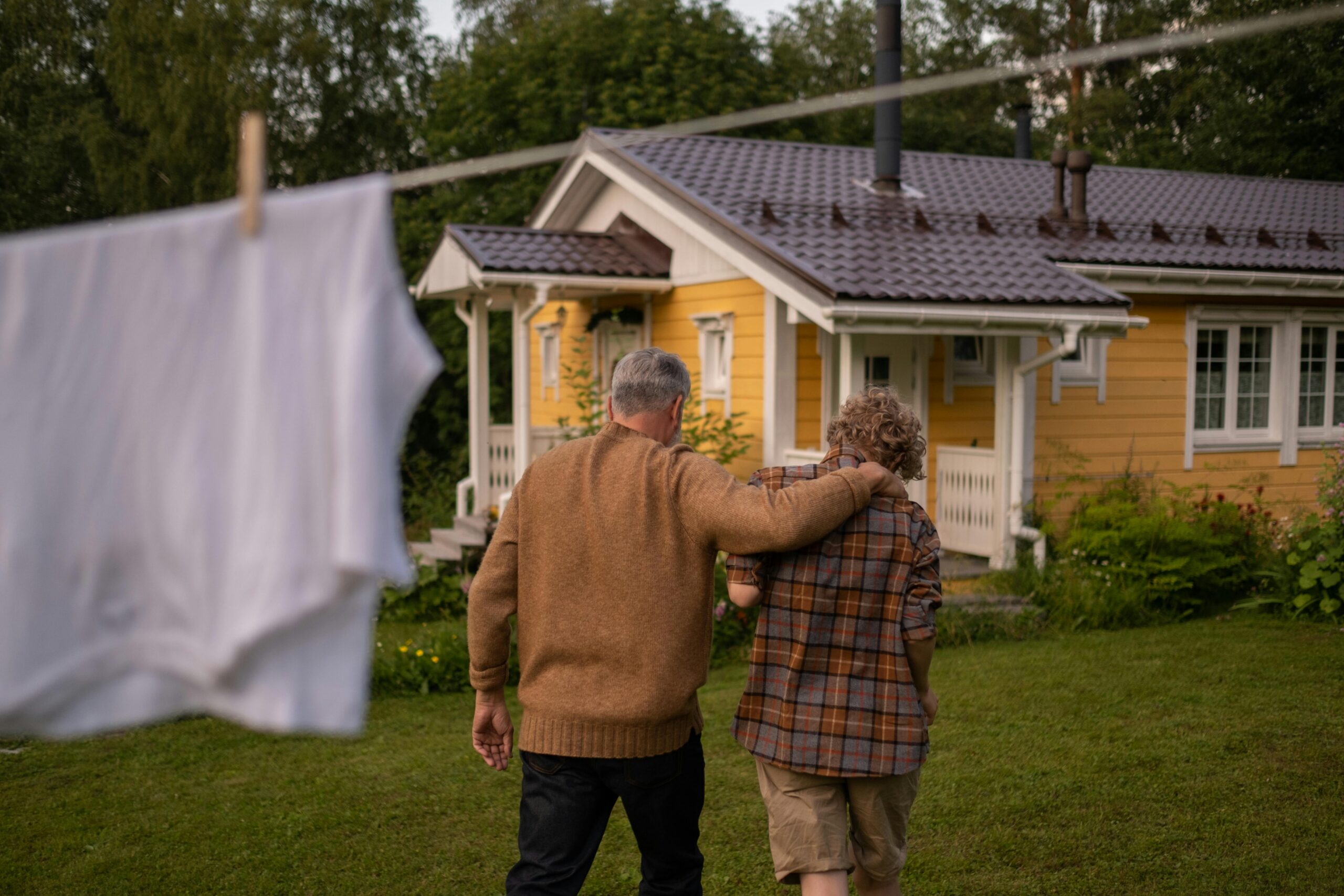
Traumatic brain injuries do not affect patients alone. Spouses, parents, children, and siblings often experience profound changes in roles and responsibilities.
Family members may:
- Take on caregiving duties unexpectedly
- Navigate insurance and medical systems
- Manage financial stress or loss of income
- Grieve changes in personality or independence
Keep in mind that caregiver burnout is common and deserves attention. Support groups, counseling, and respite care can be just as important for families as medical treatment is for patients. Explore our 50-State Guide for resources near you.
Returning to Work, School, and Daily Life
Resuming normal activities after a TBI often requires modifications and accommodations. Pushing too hard too soon can worsen symptoms. A gradual, supported return often leads to better long-term outcomes.
Many people benefit from:
- Reduced work hours or flexible schedules
- Quiet environments and rest breaks
- Extended time for tasks or exams
- Assistive technology or organizational tools
How Neuropsychologists Help Treat Brain Injuries and Guide Recovery
In the video below, Stewart L. Cohen of Cohen, Placitella & Roth sits down with Dr. Thomas Swirsky-Sacchetti, a nationally recognized neuropsychologist, to explore the full range of what neuropsychologists do to guide patients back to function after a traumatic brain injury.
Stewart Cohen: You touched a little bit on the neuropsychologist’s role in recovery and treatment. Could you go into some detail about that? What’s your job and how do you do it?
Dr. Thomas Swirsky-Sacchetti: So — pattern analysis. We’re looking for the strengths and weaknesses across all those different functions. And the easiest way to describe the treatment approach is to say that one of the things we try to do — the easiest thing, actually, especially with today’s technology — is compensation. Think of it as a crutch. Like if someone has a knee replacement, they can get around, but they need a cast and a crutch.
An example: I was working with a professor — someone of some notoriety in the Philadelphia area — who had a head injury in his 60s. He was able to stand up and give a lecture to 200 students with no problem — until his head injury. So the compensation we used, because he wanted to continue teaching, was that now he had to use slides. Before, he could get up and lecture extemporaneously. The problem wasn’t his memory, because what he was talking about was long-term memory, not short-term. The problem was his frontal lobe — he would go off on complete tangents, and ten minutes later think, “Oh my God, where am I?”
So we had him develop a slide presentation and talk from the slides. It’s not changing anything about the way his brain is doing it. The changes are external — in the environment. It’s like a crutch or a wheelchair.
In terms of what happens inside the brain, there are two categories. One is to exercise that same brain region that’s impaired — to get those neurons to get closer together. The more you work that area, the more blood flow gets to it, and it helps those neurons heal. A concrete example: one of the most common things head-injury patients have is word retrieval. They can’t quite find the right word — it’s on the tip of their tongue. That would be the angular gyrus of the left parietal lobe — this is where words are stored. It has to go up a pathway called the arcuate fasciculus to the frontal lobe, where it’s actually spoken.
So a speech therapist might give a patient pictures of different objects — more and more uncommon objects — and have them try to retrieve the name. Just as a way of exercising, the way you’d exercise your arm after it came out of a cast.
The other way — a bit more complicated — is finding a different brain region. If the pathway between the angular gyrus and the frontal lobe is really impaired, we have to find an alternate route. That’s where I feel we can be most creative, because people who are really good at things learn to use other areas of their brain that most of us wouldn’t even use.
A short-term memory example — probably the most commonly reported symptom of TBI. If I ask you to remember four words — house, tree, cat, pie — how would your brain process that?
Stewart Cohen: In school I would use initials. HTCP.
Dr. Thomas Swirsky-Sacchetti: Right. Now you have to remember those letters, which is true. Some people make up a word or phrase — something that contains those sounds. Some people use verbal rehearsal: house, tree, cat, pie — house, tree, cat, pie. That’s using the left temporal lobe. That’s verbal memory.
But if the left temporal lobe is impaired because of an injury, I might ask you to picture in your mind’s eye a house with a tree in the front yard and a cat sitting on one of the branches, and maybe a blueberry pie cooling on the front porch. Take a snapshot of that. Then you’re using a totally different region of your brain — the right temporal lobe, responsible for non-verbal memory. You just have to pull up that picture.
I tell people: a guy will say to me, “My wife sent me to the supermarket to get four things. I can’t believe I forgot one.” Just take a mental snapshot of those four things on the checkout belt. You’ve got it — because it’s using a totally different region of the brain that, based on my testing, I know is less impaired than the left temporal lobe.
When Legal and Financial Guidance Matters
Because traumatic brain injuries can have lifelong consequences, patients and families may face ongoing medical costs, lost earning capacity, and future care needs. In cases where a TBI was caused by someone else’s negligence, understanding legal rights and sources of financial support can be an important part of protecting long-term stability.
Documentation, expert evaluation, and early advocacy can make a significant difference in ensuring access to appropriate resources and compensation.
Important Reminders for Patients and Families
- Recovery does not follow a straight line
- Progress can be real even when it feels slow
- Emotional changes are part of the injury, not a personal failing
- Support systems matter—no one should navigate TBI alone
- Hope exists, even when the future looks different than expected
Moving Forward After Traumatic Brain Injury
Life after a traumatic brain injury may not look the way it once did — but a meaningful, fulfilling life is still possible. With the right medical care, rehabilitation, support, and advocacy, patients and families can adapt to new challenges and build a future grounded in understanding, patience, and resilience.
Need help investigating your legal rights related to a TBI?
Speak to an experienced brain injury attorney team like Cohen, Placitella & Roth.
For five decades, CPR has successfully represented individuals and families in TBI cases nationwide working with qualified co-counsel.

Get Our Free Traumatic Brain Injury Book
To learn more about Traumatic Brain Injury request our comprehensive book, available for free directly to your inbox